Online terapie
Přehled tohoto tématu zatím máme jen v angličtině.
Ve zkratce
- Online treatment can reduce symptoms, but benefits depend on the programme, client group and comparison treatment.
- Supported programmes have advantages, but online, blended and face-to-face formats are not interchangeable.
- Discuss what happens between sessions: digital tasks can support reflection, but also create burden, misunderstanding or avoidance.
Na čem přehled stojí
Co platí
z klasik a zavedených studií-
Computerised and internet-based psychological treatments reduce adult depressive symptoms compared with control conditions, with small to moderate average benefits. Benefits are smaller compared with usual care than with waiting lists. Weaknesses in the studies and how participants were recruited limit how confidently these findings apply to routine care. (Andersson a kol., 2009)
-
Across trials of digital treatment for adult depression, professionally supported programmes showed larger benefits than unsupported programmes. This comparison does not establish that adding a check-in to an existing self-help programme improves outcomes, or identify the necessary type or amount of support. (Andersson a kol., 2009)
-
The classic evidence does not establish that digital treatment equals face-to-face psychotherapy for adult depression. The available direct comparisons were few and uncertain, so their small average difference should not be read as proof of equivalence. (Andersson a kol., 2009)
Co je nového
výzkum z let 2025 a 2026-
upřesňuje přidáno 19. 11.
In routine European care, CBT combining sessions and guided online modules met the trial's standard for not being meaningfully worse than usual care for major depression. Usual care was mostly face-to-face CBT. This strengthens the case for that specific combination of sessions and guided modules, not for replacing sessions with unsupported tools. The 12-month conclusion changed when one country's data were excluded. Many participants were not assessed later, and cost savings were not established. (Riper a kol., 2026)
Týká se: The classic evidence does not establish that digital treatment equals face-to-face psychotherapy for adult… -
upřesňuje přidáno 19. 11.
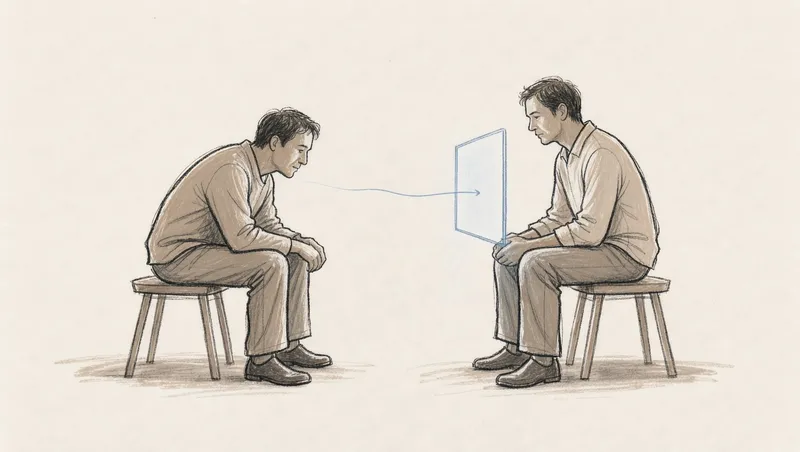
German therapists described video sessions as hiding gestures and posture, complicating eye contact and making non-verbal cues easier to misread; close-up facial views could also feel informative or overly intimate. They adapted by putting their impressions into words, adding an account of how the format changes session work rather than evidence about comparative outcomes. (Holzhaus a kol., 2026)
Týká se: The classic evidence does not establish that digital treatment equals face-to-face psychotherapy for adult… -
upřesňuje přidáno 19. 11.
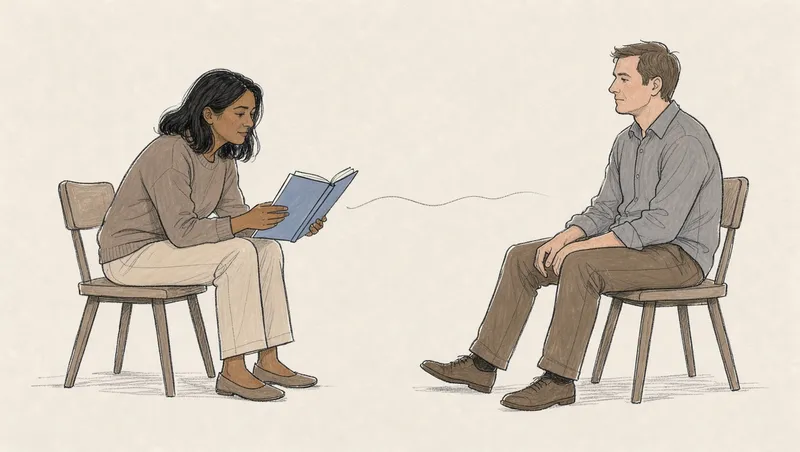
An observational analysis of early sessions linked empathy or active listening followed by client agreement to a stronger bond specifically on video, while client disagreement following these responses was linked to a weaker bond in both formats. Accurate recall and joking were also associated with stronger video-session bonds. The abstract-only evidence highlights sequences of interaction, but does not show that prescribing these behaviours improves the alliance. (Fernández-Regueras a kol., 2026)
Týká se: The classic evidence does not establish that digital treatment equals face-to-face psychotherapy for adult… -
upřesňuje přidáno 19. 11.
Women receiving blended trauma-focused cognitive therapy for PTSD described therapist sessions as providing safety, emotional support and room to adapt the programme. Trauma work was experienced as both valuable and demanding, with doing it alone at home opening space for avoidance, while workload and rigid instructions could undermine engagement. This adds a client account of support in blended PTSD treatment, without establishing its effectiveness relative to face-to-face therapy. (Lundin a kol., 2026)
Týká se: Across trials of digital treatment for adult depression, professionally supported programmes showed larger… -
upřesňuje přidáno 19. 11.
Young adults using digital questionnaires and outpatients using daily monitoring described tracking as a way to recognise patterns and bring difficult experiences into clinical conversations. They also described burdensome repetition, scores or questions that did not fit, and a need for shared interpretation, flexible schedules and feedback. These accounts extend the role of clinician support to making digital tasks meaningful in care, rather than demonstrating symptom benefits from monitoring. (Henry a kol., 2026; Kurilla a kol., 2026)
Týká se: Across trials of digital treatment for adult depression, professionally supported programmes showed larger… -
upřesňuje přidáno 19. 11.
Experienced South Korean counselors described clients using ChatGPT between sessions to organise feelings, revisit therapy and seek comfort, sometimes bringing clearer questions or new topics into sessions. They also described clients treating persuasive answers as facts and encountering explanations that conflicted with therapy. Their accounts add a new between-session process to consider, not evidence that AI helps or harms treatment. (Eunsun, 2026)
Týká se: Across trials of digital treatment for adult depression, professionally supported programmes showed larger… -
upřesňuje přidáno 19. 11.
Distressed co-parent couples who completed an online relationship programme described change agreements becoming contracts, flexible expressions of understanding, or reminders of unequal responsibility. Their meanings shifted in daily life and could include guilt or renewed accusations. This extends the picture beyond depression outcomes to how couples live with programme tasks after online treatment ends. (Lassen a kol., 2026)
Týká se: Computerised and internet-based psychological treatments reduce adult depressive symptoms compared with… -
upřesňuje přidáno 19. 11.
For recently widowed older adults with mild depressive symptoms, digital routine monitoring with weekly coaching reduced depression and anxiety more than enhanced usual care at 3 months. It did not show greater improvement in complicated grief or post-traumatic stress. At 15 months, the difference in depression could be chance. This adds a specific supported option for depressive symptoms in bereavement, not an established grief treatment. (Stahl a kol., 2026)
Týká se: Computerised and internet-based psychological treatments reduce adult depressive symptoms compared with… -
upřesňuje přidáno 19. 11.
Among students meeting criteria for adjustment disorder, online Unified Protocol CBT and online relaxation both reduced symptoms more than a waiting list; only CBT improved academic adjustment. The abstract reports associations linking changes in avoidance and self-compassion to improvement, but does not establish these as causal mechanisms or specify therapist support. This extends evidence to a defined student clinical group without showing that CBT is superior to relaxation for symptom relief. (Juszczyk-Kalina a kol., 2026)
Týká se: Computerised and internet-based psychological treatments reduce adult depressive symptoms compared with… -
upřesňuje přidáno 19. 11.
A review compared treatments, including some not tested directly against each other. Digital CBT reduced insomnia severity more than usual care in adults with cancer, mostly after cancer treatment. This adds evidence for digital insomnia treatment in cancer care. But confidence in the findings was low to very low, and comparisons gave inconsistent results. Its high ranking therefore does not prove it works better than face-to-face or other formats. (Lee a kol., 2026)
Týká se: Computerised and internet-based psychological treatments reduce adult depressive symptoms compared with… -
upřesňuje přidáno 19. 11.
A self-guided, multicomponent programme reduced depression and burden compared with a waiting list in dementia family caregivers selected for depressive symptoms. This shows that an unsupported programme can benefit this group, without testing whether guidance would add benefit or isolating the contribution of its AI chatbot. The abstract-only findings cover one month, and statistical mediation does not prove how change occurred. (Cheng a kol., 2026)
Týká se: Across trials of digital treatment for adult depression, professionally supported programmes showed larger… -
upřesňuje přidáno 19. 11.
A review of digital third-wave programmes included trials in adults with mental-health conditions. Immediately after treatment, any link between therapist guidance and results could be chance. Guided programmes did better for depression when assessed again a short time later. This makes the support finding more dependent on therapeutic approach and timing rather than overturning the earlier depression evidence. Across the mixed clinical and nonclinical evidence, benefits were smaller against active treatments, varied widely and had limited long-term support. (Gordon a kol., 2026)
Týká se: Across trials of digital treatment for adult depression, professionally supported programmes showed larger… -
upřesňuje přidáno 19. 11.
For adults with OCD, concentrated therapist-led exposure and response prevention reduced symptoms more than an unguided internet programme, with the difference persisting at 3 months. This illustrates why results for blended depression care cannot establish interchangeability across disorders and formats. The trial compared substantially different amounts of therapist contact at one centre, not delivery mode alone. (Jelinek a kol., 2026)
Týká se: The classic evidence does not establish that digital treatment equals face-to-face psychotherapy for adult…
Co zatím nevíme
- The necessary type and amount of therapist support remain unclear across programmes and diagnoses.
- Most newer findings do not establish long-term benefit, cost-effectiveness or suitability for clients with limited digital access.
- Whether altered non-verbal communication, AI use or digital monitoring changes treatment outcomes remains unresolved.
- Blended trauma treatment for complex histories and programme fit across more diverse client groups need further study.
Co to znamená pro praxi
- Identify the actual format, programme and clinical indication when discussing online treatment; present blended CBT as an option for major depression without promising cost savings or equivalence across all digital formats.
- In video sessions, ask clients to describe bodily reactions that may be outside the camera view, and check whether your empathic understanding fits rather than assuming that silence means agreement.
- Review digital tasks and scores together, invite clients to question their fit, and discuss workload; with clients receiving blended PTSD treatment, explicitly explore the demands of trauma work at home and the support they need.
- Ask clients who use AI between sessions what they discussed, what felt convincing and what personal information they shared; explore the meaning of the answers without treating them as established facts.
- With couples using online change agreements, ask how each partner experiences the agreement in daily life and who carries responsibility for maintaining it.
Studie k tématu
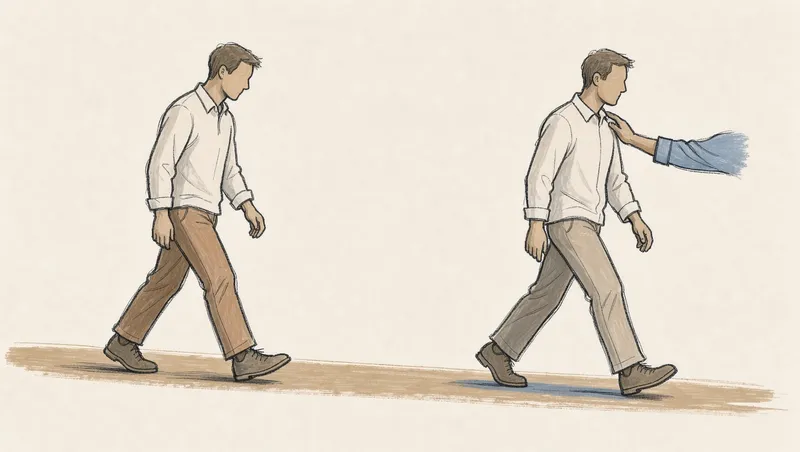
Jak mladí dospělí prožívají digitální měření v běžné péči o duševní zdraví
Mladí dospělí v běžné péči považovali vyplňování dotazníků za užitečné hlavně tehdy, když s nimi terapeut výsledky probíral.
Dohody o změně v každodenním životě párů: dobré úmysly nestačí

Autoři sledovali, jak páry používají dohody o změně z online programu v běžném životě.
Práce doma, pak spolu v sezení: zkušenosti klientů s kombinovanou terapií PTSD
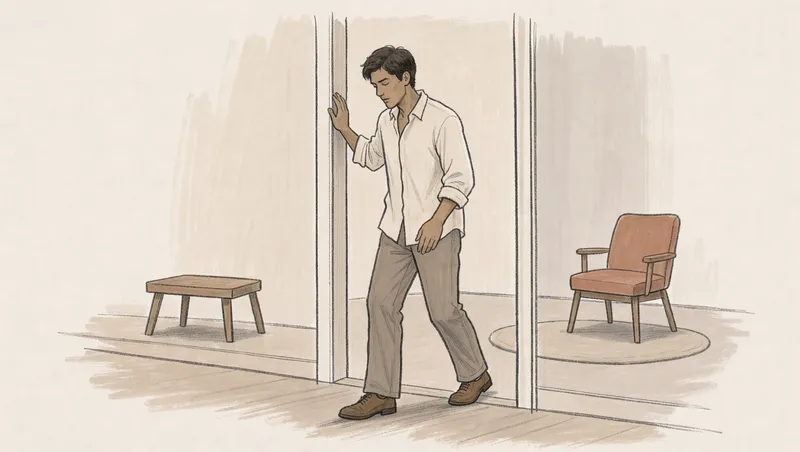
Studie založená na rozhovorech zjišťovala, jak klienti prožívají kombinovanou terapii PTSD. Terapie spojovala online program s šesti sezeními tváří v tvář.
Mikroprocesy předpovídající emoční pouto v terapii online a tváří v tvář
V online terapii předpovídalo silnější emoční pouto to, když klient hned po terapeutově empatii přitakal.
Neverbální komunikace ve videoterapii: zkušenosti terapeutů
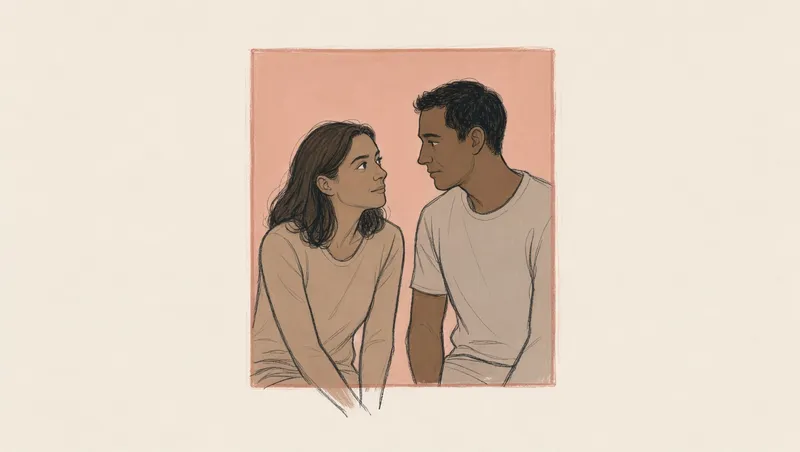
Terapeuti ve videoterapii vidí méně neverbálních signálů než při sezení tváří v tvář. Osm z dvanácti dotázaných uvedlo, že si neverbální projevy častěji vyložili špatně.
Jak terapeuti vnímají používání ChatGPT klienty mezi sezeními
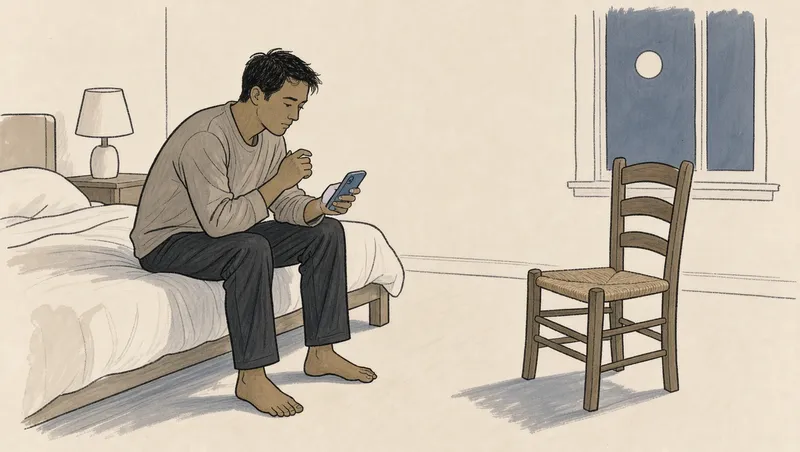
Terapeuti popsali, že klienti používají ChatGPT mezi sezeními k třídění emocí a k přemýšlení o sobě.
Internetové sebesledování chování u starších ovdovělých lidí s mírnými depresivními příznaky
Autoři zjistili, že internetové sebesledování chování zmírnilo depresi u starších ovdovělých lidí. Rozdíl proti rozšířené obvyklé péči byl středně velký.
Kombinovaná léčba deprese versus běžná péče: noninferioritní studie
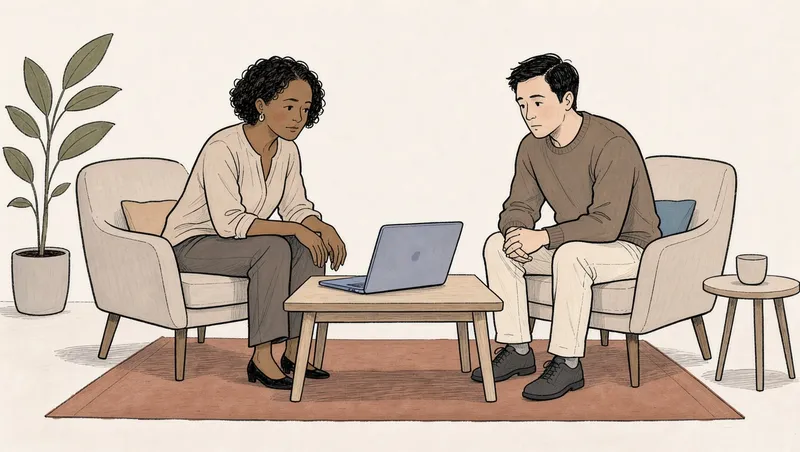
Kombinovaná péče spojuje sezení tváří v tvář s online moduly.
Internetová transdiagnostická KBT u studentů s poruchou přizpůsobení

Šestitýdenní internetová KBT zmírnila příznaky poruchy přizpůsobení u studentů více než čekací listina. Pouze tato terapie ale zlepšila i zvládání studia.
Predikce ukončení terapie z přepisů prvních sezení
Předčasné ukončení terapie je časté a často přichází už na začátku. Co terapeut řekne v prvním sezení, může mírně napovědět, zda klient zůstane.
Různé formy KBT nespavosti u onkologických pacientů: síťová metaanalýza
Nespavost trápí 30 až 60 procent lidí po léčbě rakoviny. Autoři přehledu porovnali různé formy kognitivně behaviorální terapie nespavosti.
Jak internetový program pomáhá pečovatelům o lidi s demencí
Program PDC30 je internetová psychoedukace pro rodinné pečovatele o lidi s demencí. V randomizované studii mírně zmírnil depresivní příznaky, zátěž i pocit přínosu.
Digitální intervence třetí vlny a duševní zdraví: metaanalýza

Autoři shrnuli 147 randomizovaných studií s 26 391 účastníky. Digitální programy třetí vlny přinesly malé až středně velké zlepšení.
Koncentrovaná expozice vs. internetová KBT u obsedantně-kompulzivní poruchy
Studie porovnala dvě léčby obsedantně-kompulzivní poruchy u 119 dospělých náhodně rozdělených do dvou skupin.
Počítačový kognitivní trénink u deprese: přehled a metaanalýza

Počítačový kognitivní trénink mírně zlepšil celkové kognitivní funkce u lidí s depresí. Účinek na příznaky deprese byl také malý, ale spolehlivý.
Destilo je vzdělávací nástroj. Neslouží jako zdravotní doporučení a nenahrazuje klinickou supervizi.